Support our Mission. We independently test each product we recommend. When you buy through our links, we may earn a commission.

The wait is over.
37 Drivers. 420 Hours. 18,620 Shots. 409,000 Data Points. 1 Best Driver of 2025 for low swing speeds.
This is the most independent, data-driven and comprehensive driver review for 2025. It is backed by more than a decade of testing experience and expertise. MyGolfSpy is the industry leader in independent product testing.
At MyGolfSpy, our mission has never wavered: We put the consumer first. No shortcuts, no bias, no allegiance to anything but the truth. That’s why we exist. To cut through the noise. To hold brands accountable. And, most of all, to ensure that you get the most out of your gear.
Hype? Never heard of her. The Best Driver of 2025 is based solely on cold, hard data.
For this test, we have 37 driver models, all of them new for the 2025 golf season except for last year’s winner, PING G430 MAX 10K. Our staff committed 420 hours to testing along with 35 avid golfers just like you and me.
This isn’t just the most comprehensive driver test, it’s the most impactful. We measure distance, accuracy and forgiveness so you know exactly what to expect when you step onto the tee.
Our goal with these test results is to provide you, the consumer, with an indispensable, objective and reliable off-the-rack resource as you explore your next driver purchase. It is a starting point, especially if you’re unsure which driver might best suit you and your needs.
These are the best drivers of 2025 for low swing speed golfers. If your swing speed is 90 mph or lower, these are the best driver options for you.

The best drivers excel across the board in our testing. They offer golfers the best blend of distance, accuracy and forgiveness. Some outperform others in specific scoring categories. Some are more balanced in their performance. Regardless, the drivers at the top of the board are the ones you should consider the most. They could change your golf game for the better, especially performance off the tee.
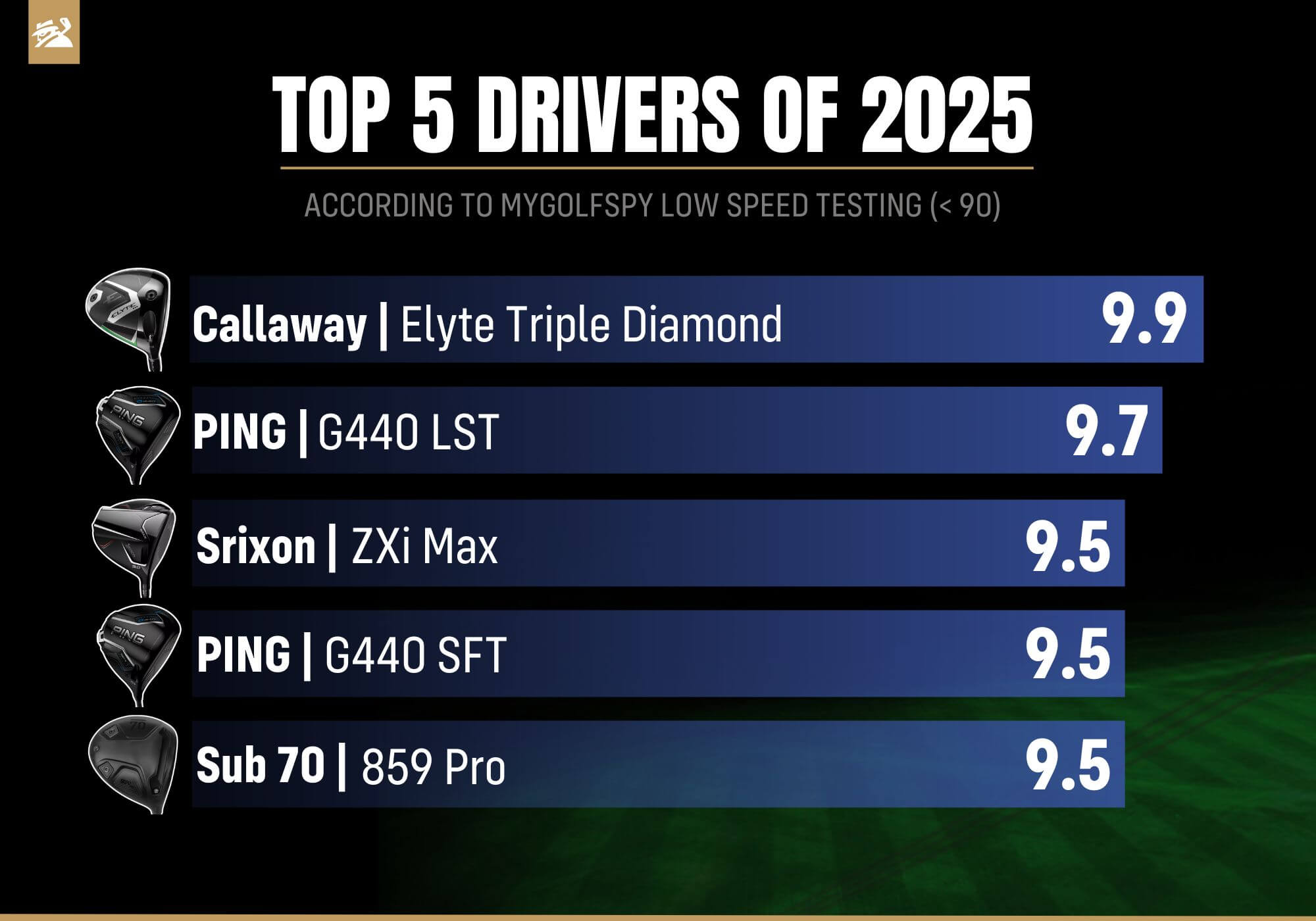
These are the best drivers of 2025 for low swing speed golfers.
 Review Score
 Distance Score
 Accuracy
 Forgiveness
 Price
Price
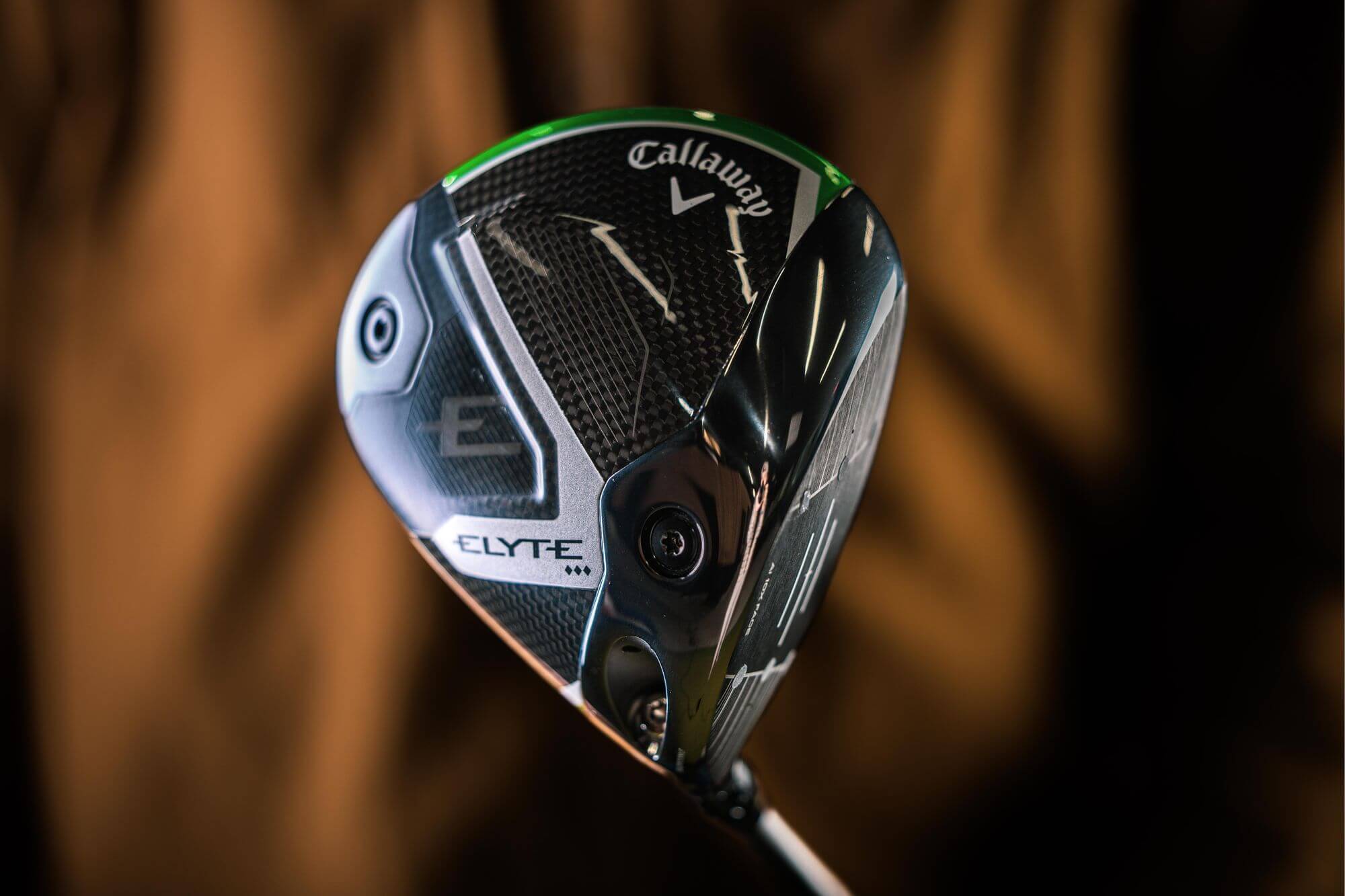
Performance defines which golf clubs are the best and which are not worth your money. Callaway Elyte Triple Diamond is the epitome of rockstar performance. It is the best driver for low swing speeds and the best driver overall for 2025. It excels in distance off the tee, which is a priority for most golfers with lower swing speeds. Not only is it long, but it accurate. With an above average forgiveness score, it produces shots that are predictable as well. This is surprisingly good for a low-spin driver.
Callaway Elyte Triple Diamond performs. However, it is still a low-spin driver and the center of gravity is pushed low and forward in the head. From a technical standpoint, this can create a quote-unquote less forgiving driver, especially on mishits. If your ball striking is poor, you might not see optimal performance with this driver.

This might bewilder some of you, but Callaway Elyte Triple Diamond is the best driver for low swing speed golfers. It is explosive off the tee and is the best for distance in this swing speed evaluation. Not only is it long off the tee, but it is accurate and reasonably forgiving. Among the competition, it is the second-best driver for accuracy. When a driver is both long and accurate, it is recipe for success.
“Long and dependable.”
“Great feedback off the face, responsive, but too shiny.”
“Gives you confidence at set up. Crown is too shiny.”
“Solid club, attractive setup and looks square. Pleased with it.
Callaway Elyte Triple Diamond is a low-spin driver by design. But, golfers have the ability to switch the placement of the two moveable weights. The heavier of the two can be positioned in the rear of the driver head. This will give a golfer a slight pump in playability and forgiveness.
For low swing speed golfers, this is beneficial to maximize launch conditions. This driver is phenomenal and if you do consider it, go through a professional fitting.
Review Score
Distance Score
Accuracy
Forgiveness
Price
PING G440 LST ranks second overall for distance and 10th among 37 drivers. It packs a punch and beats out some top dogs for distance. A core reason is it offers the third-best ball speed average in the test. In terms of accuracy, having straight and playable shots help keep G440 LST relevant in the accuracy discussion. Plus, these will help distance performance in the long run. More fairways will equal longer shot outcomes.
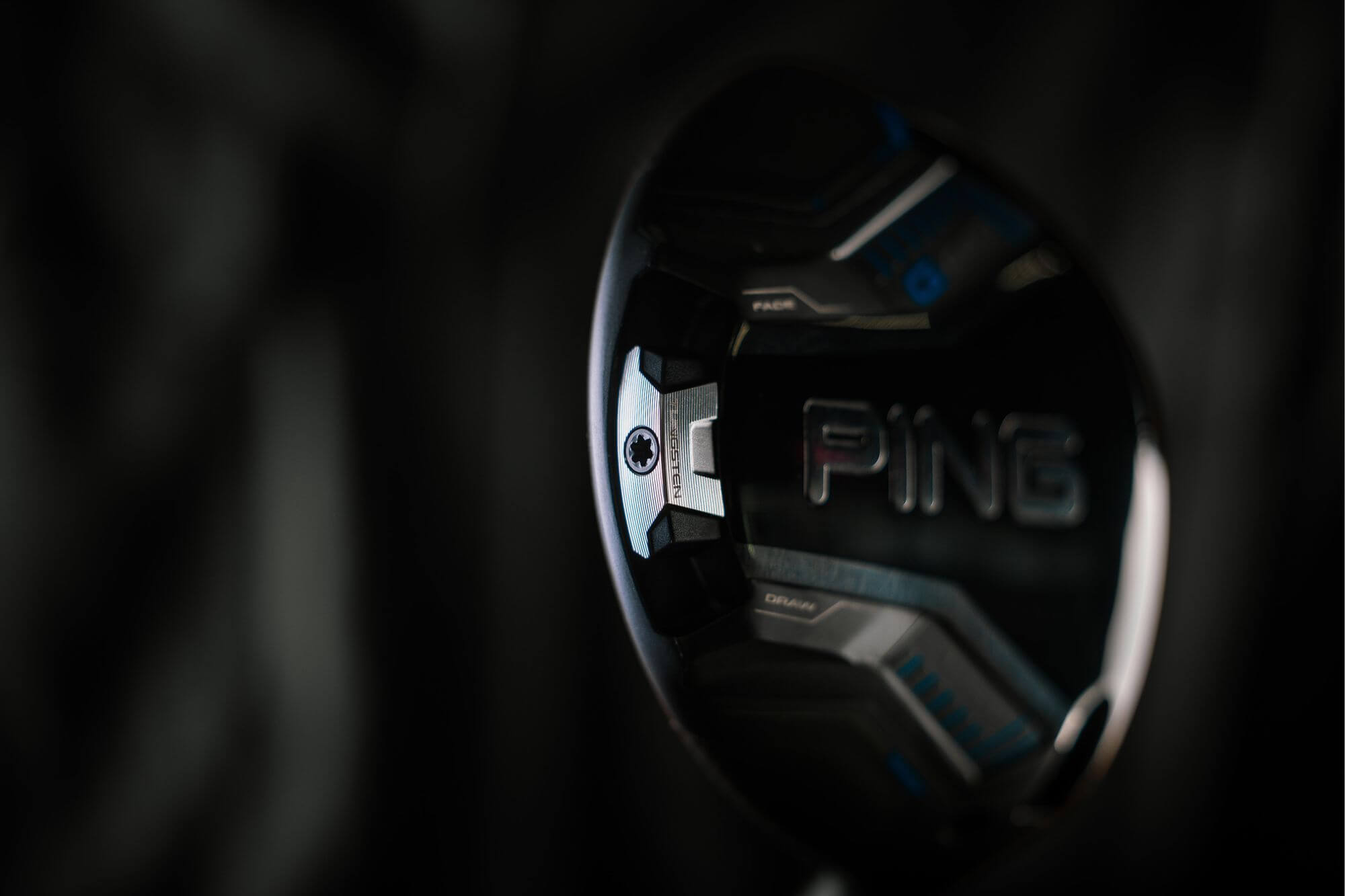
Performance should be the dealbreaker when it comes to playing a golf club, especially a driver. There are those of you who are ready to die on this hill and absolutely abhor "turbulators". We get it. But, until PING finds "turbulators" ineffective, they're staying put. And before we go, PING G440 LST is one of the highest rated drivers for looks. Let that sink in.
PING G440 LST is the second-best driver for low swing speeds in 2025. Much like other top performers in this category, G440 LST is exceptional for distance. It ranks second for distance and produces the third fastest ball speed average in the test. But, the greatness doesn’t stop there. G440 LST driver is consistent on a shot-to-shot basis. To go even further, it is among the leaders for accuracy. All in all, it is one of the best all around drivers for low swing speed golfers. Surprise, surprise.
“Great weighting and balance.”
“I hit it really well. The performance numbers off toe strikes were exceptional.”
PING drivers are consistently among the leaders in testing. G440 LST is another prime example of the performance benefits. Even in our low swing speed breakdown, another low-spin driver rises to the top of the leaderboard. The key takeaway for G440 LST is how balanced of a performer it is. It excels in distance, accuracy, and forgiveness.
Review Score
Distance Score
Accuracy
Forgiveness
Price
Performance across the board is critical with a driver. A driver that provides distance, accuracy, and forgiveness i.e. consistent shot outcomes is a driver worth considering. For a low swing speed golfer, Srixon ZXi Max is a fantastic option. Despite being a higher MOI driver, it produces playable results. Furthermore, and arguably its most impressive accomplishment is being the second-best driver for ball speed.
Throughout testing, our testers commented on the lack of subjective appeal, especially acoustically. Most believe it to be one of the loudest driver on the market.
In our low swing speed breakdown, Srixon ZXi Max ranks third overall. It won’t be a flashy pick for most. But, it is super consistent for all three of our scoring categories. It ranks in the top 10 for distance, accuracy, and forgiveness. A closer look at ZXi Max’s performance showcases that it is the second-best driver for ball speed at low swing speeds. Given that it is a higher MOI driver, this accomplishment is surprising. But, this leads to it being one of the best drivers for distance in our low swing speed evaluation.
“Balanced, consistent outcomes.”
“Good numbers across the board. Louder than other drivers.”
“Squares up easily and sits square at address. The sound is intolerable.”
Unlike the two drivers above, Srixon ZXi Max is not low-spinning by design. It offers a higher baseline MOI number, which will help most low swing speed golfers. Those of you who aren’t as consistent with your strike locations will like this driver more. As always, go through a professional fitting. But, Srixon ZXi Max is a great all around driver for lower swing speed golfers.
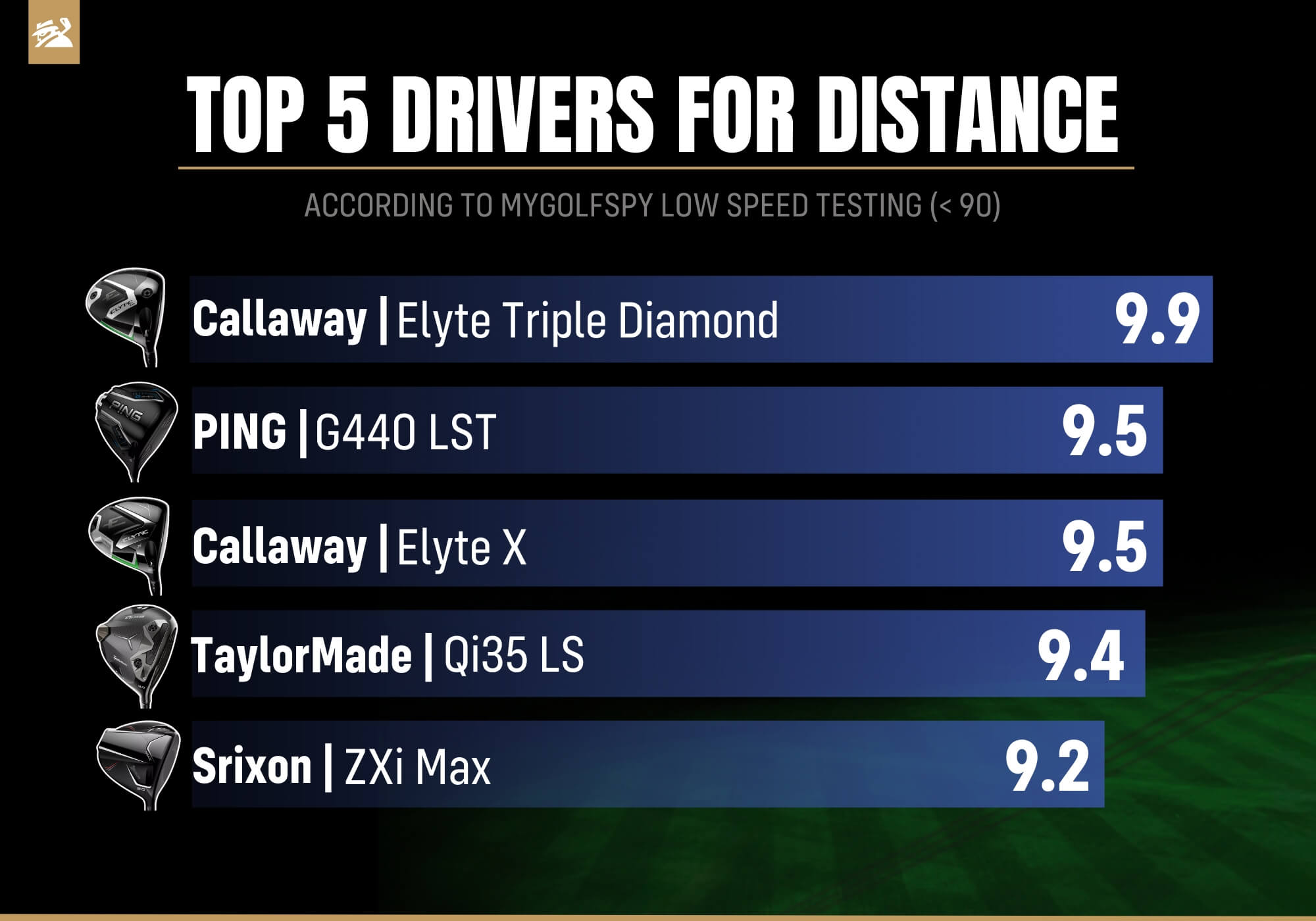
Distance is straightforward: carry and total distance.
Most golfers will prioritize distance overall. With a driver, it is a critical piece to the equation. This is why we weigh distance performance slightly higher than accuracy in our driver test.
In some cases, you will see a tradeoff between distance and accuracy. It is a performance situation that requires balancing. However, if distance is your top priority, look no further.
Here are the best drivers for distance.
Distance Score
Accuracy
Forgiveness
Review Score
Price
Performance defines which golf clubs are the best and which are not worth your money. Callaway Elyte Triple Diamond is the epitome of rockstar performance. It is the best driver for low swing speeds and the best driver overall for 2025. It excels in distance off the tee, which is a priority for most golfers with lower swing speeds. Not only is it long, but it accurate. With an above average forgiveness score, it produces shots that are predictable as well. This is surprisingly good for a low-spin driver.
Callaway Elyte Triple Diamond performs. However, it is still a low-spin driver and the center of gravity is pushed low and forward in the head. From a technical standpoint, this can create a quote-unquote less forgiving driver, especially on mishits. If your ball striking is poor, you might not see optimal performance with this driver.
This might bewilder some of you, but Callaway Elyte Triple Diamond is the best driver for low swing speed golfers. It is explosive off the tee and is the best for distance in this swing speed evaluation. Not only is it long off the tee, but it is accurate and reasonably forgiving. Among the competition, it is the second-best driver for accuracy. When a driver is both long and accurate, it is recipe for success.
“Long and dependable.”
“Great feedback off the face, responsive, but too shiny.”
“Gives you confidence at set up. Crown is too shiny.”
“Solid club, attractive setup and looks square. Pleased with it.
Callaway Elyte Triple Diamond is a low-spin driver by design. But, golfers have the ability to switch the placement of the two moveable weights. The heavier of the two can be positioned in the rear of the driver head. This will give a golfer a slight pump in playability and forgiveness.
For low swing speed golfers, this is beneficial to maximize launch conditions. This driver is phenomenal and if you do consider it, go through a professional fitting.
Distance Score
Accuracy
Forgiveness
Review Score
Price
PING G440 LST ranks second overall for distance and 10th among 37 drivers. It packs a punch and beats out some top dogs for distance. A core reason is it offers the third-best ball speed average in the test. In terms of accuracy, having straight and playable shots help keep G440 LST relevant in the accuracy discussion. Plus, these will help distance performance in the long run. More fairways will equal longer shot outcomes.
Performance should be the dealbreaker when it comes to playing a golf club, especially a driver. There are those of you who are ready to die on this hill and absolutely abhor "turbulators". We get it. But, until PING finds "turbulators" ineffective, they're staying put. And before we go, PING G440 LST is one of the highest rated drivers for looks. Let that sink in.
PING G440 LST is the second-best driver for low swing speeds in 2025. Much like other top performers in this category, G440 LST is exceptional for distance. It ranks second for distance and produces the third fastest ball speed average in the test. But, the greatness doesn’t stop there. G440 LST driver is consistent on a shot-to-shot basis. To go even further, it is among the leaders for accuracy. All in all, it is one of the best all around drivers for low swing speed golfers. Surprise, surprise.
“Great weighting and balance.”
“I hit it really well. The performance numbers off toe strikes were exceptional.”
PING drivers are consistently among the leaders in testing. G440 LST is another prime example of the performance benefits. Even in our low swing speed breakdown, another low-spin driver rises to the top of the leaderboard. The key takeaway for G440 LST is how balanced of a performer it is. It excels in distance, accuracy, and forgiveness.
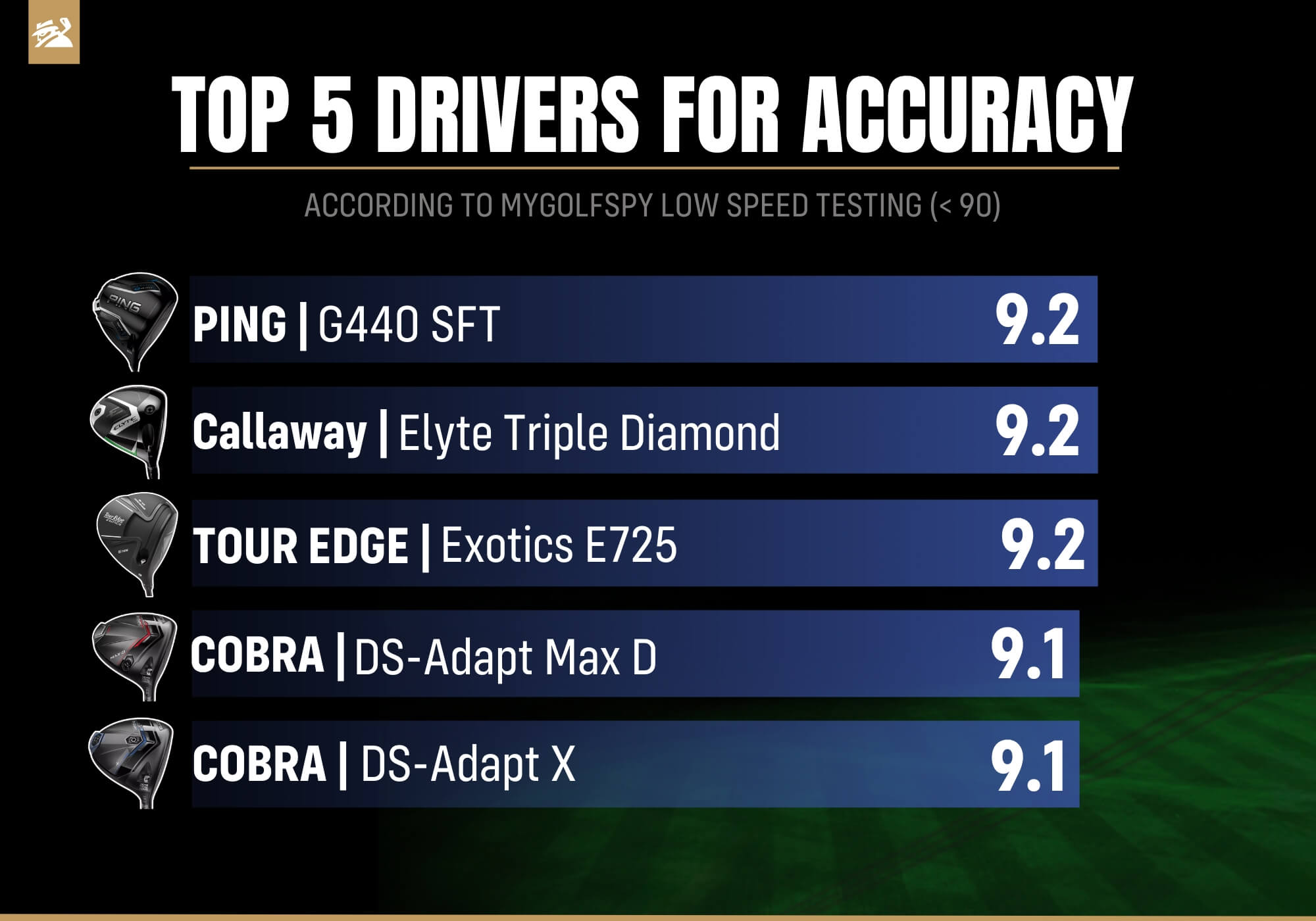
Just because we weigh distance slightly more than accuracy does not mean you should neglect it. Ignoring accuracy is a huge mistake for most golfers. Keeping the ball in play leads to better scores.
Accuracy is a blend. Hitting fairways is key. Producing playable shot outcomes is equally important. Are your drives landing and coming to rest in playable conditions? This is what we are evaluating for driver accuracy.
Here are the best drivers for accuracy.
Accuracy
Distance Score
Forgiveness
Review Score
Price
PING G440 SFT lives up to the name "straight" flight technology. G440 SFT ranks first for accuracy in our low swing speed evaluation. Accuracy is a combination of straight and playable shot outcomes. Additionally, fairway percentage plays a role in this scoring category. If you want a driver that can assist with a fade or slice, G440 SFT is a phenomenal option. If you want pure accuracy, it is a great option as a driver. Go check it out.
Spin is usually your friend, especially when it comes to hitting less offline shots. This is a benefit of PING G440 SFT. A 9 degree head offering allows for more playability overall, especially to keep the spin down. However, it is still made to spin. Out of 37 drivers, it is the highest spinning in the low swing speed breakdown. Yes, you'll be accurate with it, but if you already spin the ball off the driver, you'll potentially leave distance on the table.
For several generations, PING’s Straight Flight Technology driver has been a leader from a draw bias standpoint and in some cases, too draw bias. The G440 SFT is the straightest iteration of the SFT line to date. In our low swing speed test, it is the best driver for accuracy, which validates the straightness of this driver. Furthermore, it offers playable distance. These scoring performances vault it to fourth place overall in our low swing speed driver results.
“Balance, great acoustics, easy to hit.”
“Turbulators where distracting. It has a solid feeling overall with great weighting.”
“Felt good and very forgiving.”
“Love the looks and feel. Very forgiving on mishits.”
If you’re a low swing speed golfer and you struggle to keep the ball in play off the tee box, PING G440 SFT is worth a try. It is extremely accurate and can be optimized for a draw. Personally, it is one of my favorite driver options on the market right now. It is super playable for option for a bunch of different golfer profiles.
Accuracy
Distance Score
Forgiveness
Review Score
Price
Performance defines which golf clubs are the best and which are not worth your money. Callaway Elyte Triple Diamond is the epitome of rockstar performance. It is the best driver for low swing speeds and the best driver overall for 2025. It excels in distance off the tee, which is a priority for most golfers with lower swing speeds. Not only is it long, but it accurate. With an above average forgiveness score, it produces shots that are predictable as well. This is surprisingly good for a low-spin driver.
Callaway Elyte Triple Diamond performs. However, it is still a low-spin driver and the center of gravity is pushed low and forward in the head. From a technical standpoint, this can create a quote-unquote less forgiving driver, especially on mishits. If your ball striking is poor, you might not see optimal performance with this driver.
This might bewilder some of you, but Callaway Elyte Triple Diamond is the best driver for low swing speed golfers. It is explosive off the tee and is the best for distance in this swing speed evaluation. Not only is it long off the tee, but it is accurate and reasonably forgiving. Among the competition, it is the second-best driver for accuracy. When a driver is both long and accurate, it is recipe for success.
“Long and dependable.”
“Great feedback off the face, responsive, but too shiny.”
“Gives you confidence at set up. Crown is too shiny.”
“Solid club, attractive setup and looks square. Pleased with it.
Callaway Elyte Triple Diamond is a low-spin driver by design. But, golfers have the ability to switch the placement of the two moveable weights. The heavier of the two can be positioned in the rear of the driver head. This will give a golfer a slight pump in playability and forgiveness.
For low swing speed golfers, this is beneficial to maximize launch conditions. This driver is phenomenal and if you do consider it, go through a professional fitting.
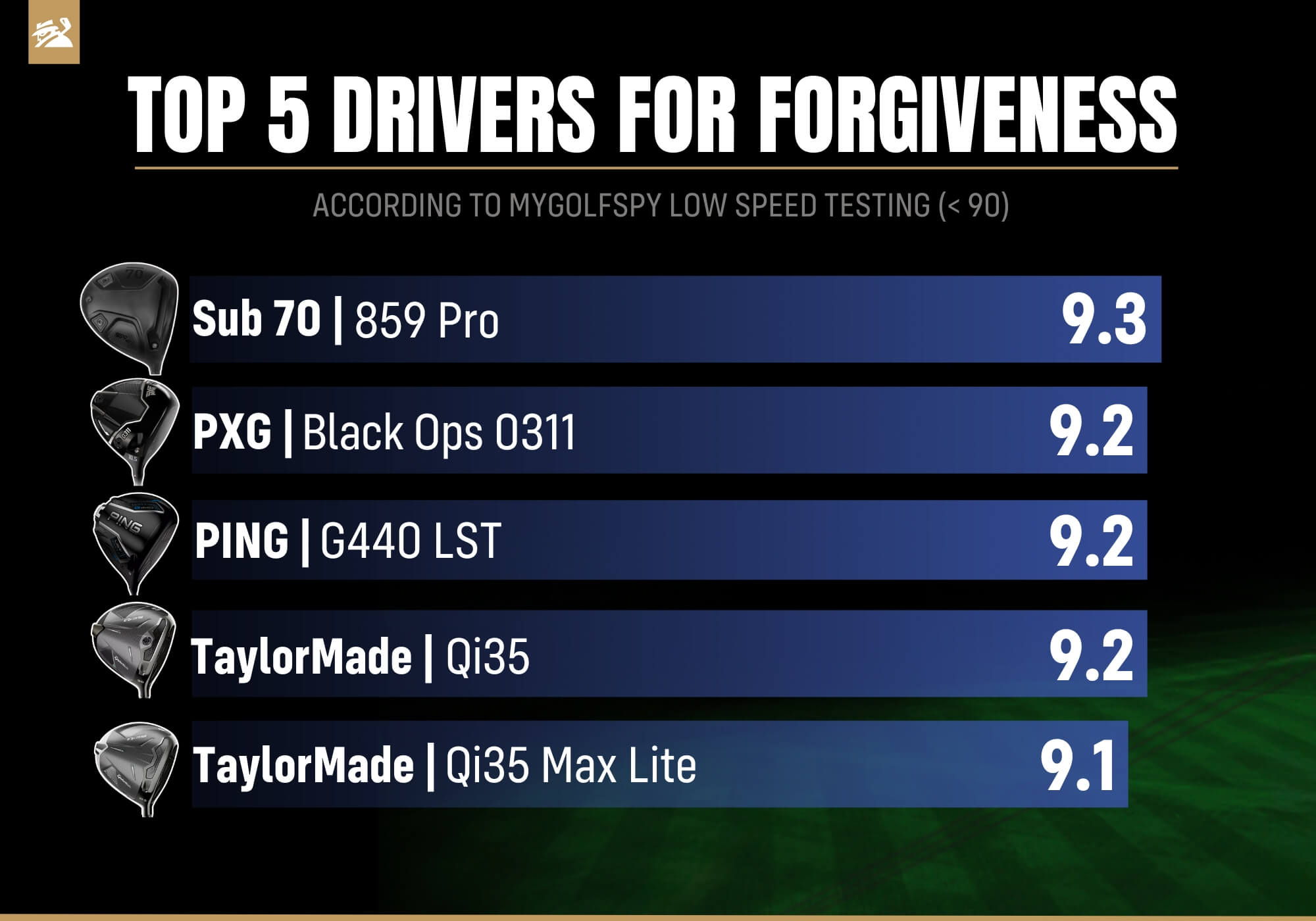
What makes a golf club, specifically a driver, forgiving?
Our industry-leading standard for defining forgiveness analyzes three specific metrics: carry distance deltas, ball speed deltas and shot area (aka dispersion).
Each of these metrics showcases how well a driver produces similar shot outcomes over time. Essentially, we are boiling it down to this:
How consistent is a driver?
Here are the best drivers for forgiveness.
Forgiveness
Distance Score
Accuracy
Review Score
Price
Most drivers with the word "pro" in their title won't be considered "forgiving". Center of gravity is pushed low and forward, which also causes the moment of inertia to be lower. However, Sub 70 859 Pro produces tight standard deviations for three key metrics – carry distance, ball speed and dispersion. In our testing, this is how we evaluate forgiveness. If a driver excels in generating tight deltas, then it will score highly for forgiveness.
Driver prices are expensive. Sub 70 859 Pro is $399.00. In this case, this is a bargain from a direct to consumer manufacturer relative to other driver prices. The icing on the cake – Sub 70 859 Pro places fifth overall in our low swing speed evaluation.
During testing, it was fairly evident that Sub 70 859 Pro was one of the lower spinning drivers, especially for low swing speed golfers. Upon completion, it is the 12th lowest spinning driver in this swing speed breakdown. More importantly, if you miss it off the high toe, be wary.
Sub 70 859 Pro is the best driver for forgiveness in our best drivers for low swing speed results. Forgiveness is a measure of consistency. When scoring our forgiveness category, we evaluate deviations for carry distance, ball speed and dispersion. Ultimately, we analyze the deltas of each of these golf ball metrics. A driver that produces the tight ranges on all of these metrics is the best for forgiveness. Sub 70 859 Pro specifically excels with consistent carry distance deltas. If you want reliable carry distances, go check out Sub 70 859 Pro.
“Like the subjective nature of it. Good balance.”
“Subjectively appealing but it is shorter than others.”
“Really like it – balanced, love the look.”
Sub 70 859 Pro is sneaky good for low swing speed golfers. It produces consistent shot outcomes, especially for carry distance. For low swing speed golfers, achieving a consistent carry distance should be a priority. Total distance will be too reliant on your playing conditions. Furthermore, Sub 70 859 Pro is a great value option.
Forgiveness
Accuracy
Distance Score
Review Score
Price
At this point, I don't expect anything less than a top tier performance from PXG in our forgiveness categories. Their drivers never quite make it to the top of the leaderboard overall, but they do offer reliable and playable shot outcomes. Forgiveness is the name of their game so far and if you want that, Black Ops 0311 is their most recent rockstar.
PXG Black Ops 0311 is mediocre for accuracy. If you spray your tee shots already, it is a driver you might not want to consider. Black Ops 0311 features an adjustable hosel adaptor and movable weights. So, I highly recommend you go through a professional fitting if you're considering. It has untapped potential.
PXG’s drivers tend to be leaders when it comes to forgiveness. In our low swing speed evaluation, PXG Black Ops 0311 ranks second for forgiveness. When it comes to reliable shot outcomes, Black Ops 0311 is one of the best. It does a tremendous job of producing tight deviations with carry distance and ball speed off the driver face. Additionally, it ranks well for dispersion. Don’t forget, you can get an incredible discount on them as well if you have a military or first responder background.
“Great balance, and subjectively appealing. Loved the ball flight.”
“Subjectively appealing, not quite as long but tighter dispersion.”
“Loud but solid. Most solid of every PXG I’ve hit.”
PXG’s drivers continue to perform. In overall testing, each model was slightly disappointing. However, each model has showcased potential in our swing speed breakdowns. For low swing speed golfers, PXG Black Ops 0311 proves to be a solid option, especially for forgiveness. Go through a professional fitting to fully optimize this driver.
Our mission is to cut through the subjective BS and encourage golfers to buy based on performance. Performance should be your top priority. However, there are other things you need to consider when purchasing a new driver.
If you’re new to golf, it can be useful to understand the parts of a driver. Golf drivers consist of several parts: the clubhead, the shaft and the grip. The clubhead is the portion that actually strikes the ball and is often made from materials such as titanium or composite blends.
The hosel connects the head to the shaft, which can vary in length and is commonly constructed from steel or graphite. The grip can be chosen separately and you can always regrip your clubs. And if you really want to go the custom route, you can add a unique ferrule, too.

Driver price points are quite the talking point nowadays. Most drivers are hovering at $600. There are several that exceed that price, even before you think about upgrading to an aftermarket driver shaft.
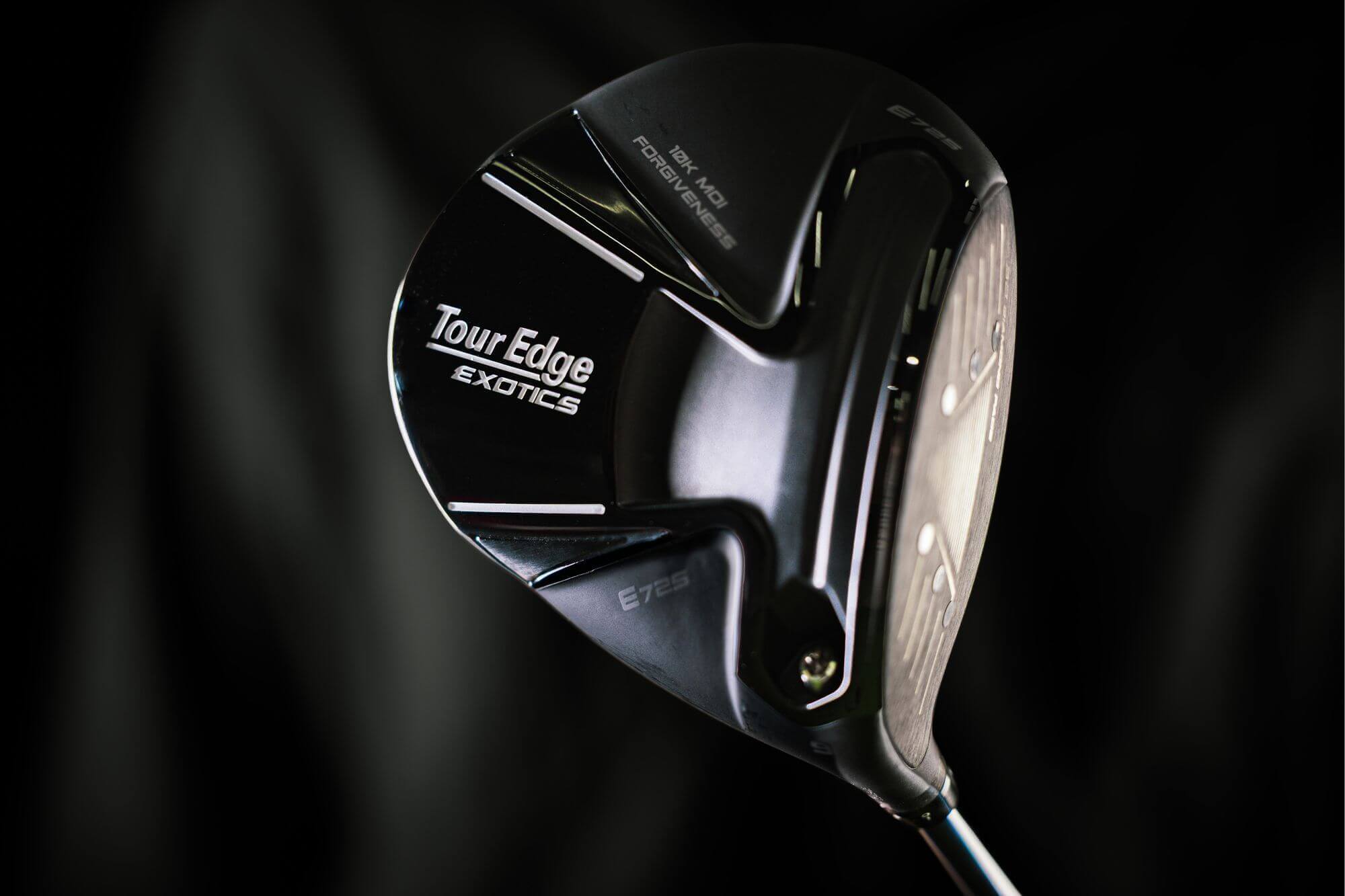
Thankfully, there are value alternatives. The likes of Tour Edge Exotics and Sub 70 offer solid performing drivers for under $400.
Now that all of the 2025 driver models have been released, many of the best drivers featured in last year’s test are on sale. Take a look at our brand-specific promo code and golf deal pages to get the best price on a new driver for your game.
Selecting the right shaft for your golf game is critical for optimal performance. The proper shaft can positively impact launch conditions and overall accuracy.
Shafts are typically made from either graphite or steel with the former being lighter and aiding in faster swing speeds. The shaft flex corresponds to swing speed and affects the trajectory.
Beginners often benefit from lighter graphite shafts that offer more flex while seasoned players may prefer the precision of stiffer steel shafts suited for more powerful swings.
If your swing speed is changing and you’re curious as to which drivers do best at every speed, here’s a quick look at the winner of each category:
| Swing Speed | Best Overall Driver | Longest | Most Forgiving | Most Accurate |
|---|---|---|---|---|
| High (105+ mph) | COBRA DS-Adapt Max K | COBRA DS-Adapt Max K | Srixon ZXi Max | PING G440 SFT |
| Mid (90–105 mph) | COBRA DS-Adapt LS | Titleist GT2 | PING G430 Max 10K | Callaway Elyte Triple Diamond |
| Low (<90 mph) | Callaway Elyte Triple Diamond | Callaway Elyte Triple Diamond | Sub 70 859 Pro | PING G440 SFT |
Testing drivers the MyGolfSpy way is not an easy task. Our 2025 Most Wanted test took 420 hours and included 37 driver models.
MyGolfSpy’s test program is powered by three crucial components :
For driver testing, we have 35 testers. Since a driver is marketed to all golfers, our testing pool includes golfers of varying swing speeds and skill levels. Due to the scale of this test, each tester committed to 12 appointments to complete the driver test. All 35 testers hit each of the 37 drivers.
Providing you, the golfer and consumer, with insights into the best drivers on the market is our No. 1 goal with this test. We can’t do that without taking a diligent, in-depth approach to analyzing the data we collect throughout this process.
Our scoring categories remain the same and we will review those below.
Overall scores are labeled as an MGS Score. The MGS Score is on a 10-point scale.
Driver testing is comprised of three scoring categories:
These three categories are weighted with distance taking a slight priority.
Maximizing driver distance is every golfer’s goal. For our distance category, we evaluate two specific metrics:
Being accurate off the tee can be a game changer. For our accuracy category, we analyze two specific metrics:
We label forgiveness as how consistent a driver is at producing consistent shot outcomes. For our forgiveness category, we assess three specific metrics:
| OEM | Club | Overall Score | Distance Score | Accuracy Score | Forgiveness Score |
|---|---|---|---|---|---|
| Callaway | Elyte Triple Diamond | 9.9 | 9.9 | 9.2 | 8.9 |
| PING | G440 LST | 9.7 | 9.5 | 9.0 | 9.2 |
| Srixon | ZXi Max | 9.5 | 9.2 | 9.1 | 8.9 |
| PING | G440 SFT | 9.5 | 9.1 | 9.2 | 8.7 |
| Sub 70 | 859 Pro | 9.5 | 8.8 | 9.1 | 9.3 |
| TaylorMade | QI35 | 9.4 | 8.8 | 9.0 | 9.2 |
| Tour Edge Exotics | E725 | 9.4 | 8.9 | 9.2 | 8.5 |
| PXG | Black Ops 0311 | 9.3 | 9.0 | 8.5 | 9.2 |
| COBRA | DS-Adapt X | 9.3 | 8.7 | 9.1 | 8.7 |
| Callaway | Elyte X | 9.2 | 9.5 | 8.6 | 7.7 |
| TaylorMade | QI35 LS | 9.2 | 9.4 | 8.4 | 8.1 |
| PING | G430 MAX 10K | 9.2 | 8.9 | 8.7 | 8.6 |
| Callaway | Elyte | 9.2 | 9.0 | 8.5 | 8.5 |
| Cleveland | HiBore XL | 9.1 | 8.4 | 8.7 | 9.1 |
| COBRA | DS-Adapt LS | 9.1 | 8.8 | 8.7 | 8.4 |
| COBRA | DS-Adapt Max K | 9.1 | 8.7 | 8.3 | 9.0 |
| TaylorMade | QI35 Max | 9.1 | 8.9 | 8.6 | 8.3 |
| Tour Edge Exotics | C725 | 9.0 | 8.3 | 9.1 | 8.5 |
| Srixon | ZXi LS | 8.9 | 8.5 | 8.9 | 8.1 |
| Honma | TW 767 LS | 8.9 | 8.9 | 8.2 | 8.1 |
| PING | G440 MAX | 8.9 | 8.2 | 8.8 | 8.6 |
| Titleist | GT4 | 8.9 | 8.8 | 8.3 | 8.2 |
| Titleist | GT2 | 8.9 | 9.0 | 8.3 | 7.6 |
| Srixon | ZXi | 8.8 | 8.0 | 8.9 | 8.4 |
| Titleist | GT1 | 8.7 | 8.2 | 8.6 | 8.3 |
| COBRA | DS-Adapt Max D | 8.7 | 7.5 | 9.1 | 8.4 |
| Honma | TW 767 | 8.6 | 8.0 | 8.3 | 8.4 |
| TaylorMade | QI35 Max Lite | 8.5 | 7.2 | 8.4 | 9.1 |
| Wilson | DYNAPWR LS | 8.5 | 8.1 | 7.6 | 8.7 |
| Wilson | DYNAPWR Carbon | 8.5 | 8.4 | 7.5 | 8.3 |
| Cleveland | HiBore XL Lite | 8.5 | 7.8 | 8.3 | 8.3 |
| Titleist | GT3 | 8.5 | 8.4 | 7.6 | 8.0 |
| Wilson | DYNAPWR Max | 8.4 | 7.9 | 7.7 | 8.7 |
| Honma | TW 767 Max | 8.4 | 7.5 | 8.8 | 7.6 |
| PXG | Black Ops 0311 Tour-1 | 8.1 | 8.0 | 6.5 | 9.0 |
| Stix Golf | Compete Driver | 8.1 | 7.1 | 8.2 | 8.2 |
| Sub 70 | 859 | 7.9 | 7.3 | 7.8 | 7.7 |
Scores are derived strictly from ball launch monitor data.
For our swing speed breakdowns, we utilize raw averages due to the smaller sample size from our testing pool. Outliers have been removed to ensure raw averages are clean and efficient.
With this being said, scores are weighted with 40 percent of the score coming from distance metrics, 35 percent from our accuracy metrics and the remaining 25 percent from our forgiveness metrics. You can reference the specific metrics within each scoring category in the previous heading section.
Finally, we reserve a very small percentage of the score to account for things like fitting considerations, excessive amounts of outliers and other details that fall outside the scope of the data.

| OEM | Club | Carry | Total | Ball Speed | Launch Angle | Backspin | Total Spin | Descent Angle | Peak Height |
|---|---|---|---|---|---|---|---|---|---|
| Callaway | Elyte | 177.18 | 192.51 | 115.28 | 15.54 | 2329.69 | 2389.61 | 33.12 | 21.53 |
| Callaway | Elyte Triple Diamond | 180.82 | 196.45 | 116.48 | 15.61 | 2343.83 | 2398.01 | 33.74 | 22.44 |
| Callaway | Elyte X | 179.42 | 194.02 | 116.61 | 15.75 | 2452.77 | 2526.7 | 34.33 | 22.75 |
| COBRA | DS-Adapt LS | 175.94 | 191.49 | 115.27 | 15.86 | 2553.56 | 2627.0 | 34.59 | 22.59 |
| COBRA | DS-Adapt Max D | 170.14 | 186.77 | 113.2 | 15.17 | 2500.29 | 2567.52 | 32.71 | 20.24 |
| COBRA | DS-Adapt Max K | 176.33 | 190.31 | 116.0 | 15.23 | 2614.56 | 2720.56 | 34.05 | 21.9 |
| COBRA | DS-Adapt X | 176.18 | 190.61 | 115.73 | 15.89 | 2672.81 | 2731.21 | 35.28 | 23.23 |
| Cleveland | HiBore XL | 174.83 | 189.58 | 115.14 | 15.41 | 2452.56 | 2524.06 | 33.24 | 21.42 |
| Cleveland | HiBore XL Lite | 172.36 | 187.08 | 114.38 | 15.13 | 2314.9 | 2430.96 | 32.02 | 20.01 |
| Honma | TW 767 | 172.92 | 187.83 | 114.65 | 14.66 | 2490.78 | 2567.24 | 32.2 | 19.91 |
| Honma | TW 767 LS | 177.45 | 191.33 | 115.59 | 15.9 | 2567.83 | 2622.51 | 34.81 | 23.03 |
| Honma | TW 767 Max | 171.67 | 185.46 | 115.1 | 14.87 | 2654.58 | 2733.95 | 32.99 | 21.01 |
| PING | G430 MAX 10K | 177.48 | 190.78 | 115.75 | 16.47 | 2786.3 | 2865.58 | 36.62 | 24.24 |
| PING | G440 LST | 179.64 | 194.07 | 116.79 | 15.22 | 2564.88 | 2624.79 | 34.19 | 22.24 |
| PING | G440 MAX | 174.19 | 188.48 | 115.16 | 15.67 | 2616.61 | 2699.5 | 34.57 | 22.34 |
| PING | G440 SFT | 178.62 | 191.59 | 116.7 | 16.31 | 2924.8 | 2990.54 | 37.32 | 24.9 |
| PXG | Black Ops 0311 | 177.53 | 192.04 | 115.68 | 15.67 | 2507.05 | 2564.17 | 34.3 | 22.43 |
| PXG | Black Ops 0311 Tour-1 | 173.41 | 187.71 | 115.3 | 14.83 | 2602.7 | 2696.89 | 33.08 | 20.91 |
| Srixon | ZXi | 173.3 | 187.53 | 114.76 | 15.38 | 2668.15 | 2723.06 | 34.21 | 21.77 |
| Srixon | ZXi LS | 174.61 | 190.42 | 114.96 | 15.28 | 2403.23 | 2469.0 | 32.83 | 21.17 |
| Srixon | ZXi Max | 178.52 | 192.19 | 116.91 | 15.11 | 2689.56 | 2754.12 | 34.55 | 22.43 |
| Stix Golf | Compete Driver | 168.34 | 185.49 | 113.79 | 14.41 | 2490.68 | 2571.36 | 31.33 | 19.23 |
| Sub 70 | 859 | 169.79 | 185.56 | 114.11 | 15.2 | 2399.69 | 2522.08 | 32.08 | 20.07 |
| Sub 70 | 859 Pro | 176.05 | 191.46 | 116.13 | 14.87 | 2489.01 | 2607.7 | 32.87 | 20.9 |
| TaylorMade | QI35 | 176.06 | 191.73 | 115.96 | 15.12 | 2625.79 | 2686.67 | 33.92 | 21.89 |
| TaylorMade | QI35 LS | 179.52 | 193.52 | 117.02 | 15.79 | 2550.91 | 2642.97 | 34.77 | 23.16 |
| TaylorMade | QI35 Max | 176.19 | 191.99 | 116.53 | 14.61 | 2506.35 | 2613.35 | 32.63 | 20.86 |
| TaylorMade | QI35 Max Lite | 170.57 | 184.33 | 113.86 | 15.62 | 2883.25 | 2990.15 | 35.21 | 21.85 |
| Titleist | GT1 | 174.68 | 187.75 | 114.47 | 16.92 | 2858.67 | 2927.03 | 37.34 | 24.55 |
| Titleist | GT2 | 177.25 | 192.11 | 115.87 | 15.42 | 2515.26 | 2567.07 | 33.91 | 22.14 |
| Titleist | GT3 | 175.25 | 189.36 | 115.46 | 15.67 | 2628.72 | 2716.54 | 34.64 | 22.48 |
| Titleist | GT4 | 176.1 | 191.29 | 115.07 | 15.86 | 2483.5 | 2549.58 | 34.33 | 22.4 |
| Tour Edge Exotics | C725 | 174.2 | 189.51 | 114.21 | 15.93 | 2411.04 | 2500.23 | 33.8 | 21.53 |
| Tour Edge Exotics | E725 | 176.61 | 192.13 | 116.65 | 14.94 | 2672.14 | 2726.91 | 33.98 | 22.16 |
| Wilson | DYNAPWR Carbon | 174.67 | 189.58 | 115.01 | 15.5 | 2412.18 | 2487.15 | 33.21 | 21.41 |
| Wilson | DYNAPWR LS | 173.43 | 188.55 | 114.09 | 16.0 | 2424.94 | 2519.48 | 34.06 | 21.96 |
| Wilson | DYNAPWR Max | 172.84 | 187.79 | 114.81 | 15.09 | 2595.47 | 2690.59 | 33.56 | 20.91 |
Our driver test is one of the longest, most extensive tests we do. Here are six key takeaways after 420 hours of testing at all swing speeds:
All 37 drivers feature an adjustable hosel at a minimum. Several also include moveable weights which allow for shot shape correction or a shift in CG location to change launch conditions.
Then, you have COBRA’s new adaptor sleeve, FutureFit33. It features 33 unique loft and lie adjustments to help dial in your driver.

Most of the top-name players dominate the top of the leaderboard: Callaway, PING, COBRA and Titleist, specifically. TaylorMade is a touch underwhelming this year according to the data.
Last year, we saw Srixon, Mizuno, and PXG take positive leaps towards driver relevancy. For example, Mizuno’s ST-G is our staff pick for the best Mizuno driver to date (we didn’t test it this year). PXG’s drivers were definitively the best to date.
This year, Srixon and PXG both have clubs that perform well for forgiveness, a positive for both companies. Each manufacturer has drivers that excel in our various swing speed breakdowns.
Sub 70 859 Pro is a standout in our low swing speed evaluation.

Despite their overall performance, Wilson’s DYNAPWR drivers are close to breaking through. Our testing pool as a whole rated all three drivers well for subjective feedback. Unfortunately, their performances were too erratic throughout the test.
Lastly, stop sleeping on Tour Edge Exotics.
2025 continues the trend of 10K (MOI). PING, COBRA, TaylorMade and Tour Edge Exotics all feature this. But that needs to be put in proper context. MOI is just a number. It’s an element of forgiveness but it’s not the whole forgiveness story. It’s a static measurement that influences a dynamic result (the things that happen when you hit a golf ball).
At the most basic level, MOI serves to preserve ball speed on off-center hits. It doesn’t always mean a more consistent driver, and it definitely doesn’t guarantee straighter drives.
BUT three specific drivers, PING G430 MAX 10K, COBRA DS-Adapt Max K and Tour Edge Exotics E725 are all top performers. So … maybe there is something to “10K”?

It’s no secret that not every manufacturer invests equally in their stock shaft offerings. While more shaft choices don’t automatically mean better results—the clubhead still has to do its job—a stronger selection does give off-the-rack buyers a better chance at finding a good fit. That’s especially important for players with higher swing speeds, where the shaft can significantly influence overall performance.
For many golfers, drivers do not always perform the way they are designed to. There is the intended design, and then there is how the club looks and feels at the address. Factors like face angle, lie angle and crown shape can influence a player’s setup in subtle ways, and that can lead to results that do not match the club’s design intent.
It is why we sometimes see draw-biased drivers producing fade-biased ball flights and why compact “better player” models with open faces can still miss left.
Here are some quick insights to help you better navigate your next hitting bay experience.

World-class testing requires world-class equipment. This is the gear we trust to help us fulfill our Most Wanted testing.

Cancer Survivor. Amputee Golfer. Essentially, a OneLeggedBoss. When he isn't facilitating testing or analyzing data, Phillip enjoys his family time, practicing and playing golf, unwinding with video games, capturing photos of nature, or devouring pretzels.


| Driver Titleist GT3 | 3 Wood Titleist GT3 |
| 7 Wood Callaway Elyte Triple Diamond | Irons (5-PW) Srixon ZXi5 |
| Wedges (46, 50, 54, 58) Titleist Vokey SM10 | Putter L.A.B. MEZZ.1 MAX |
| Ball Titleist Pro V1x |
1 year ago
I agree I am a little confused, as typically slower swings need to get the ball airborne. Also, it seems that most manufacturers do not have the recommended shaft for that head for slower swingers. That being said, I am 70 years old with a SS of around 88 mph. I was fitted by Titleist for a GT 3 rather than the GT2 so I could decrease my spin rate. (had to have it ordered custom with a regular shaft @11 degree head) When I hit it well, I gained distance. Mishits hurt more by losing accuracy. I went back to my Ping G430 10K and consistency is way better.
1 year ago
how could low speed player play with low spin head? I thought it is exact opposite in that situation.
1 year ago
Slow swing speed players do not need a $650 driver in the bag. Period.
The benefit of a hot driver to anyone that swings below 85 mph isn’t there. Slow swing players need higher lofted drivers. And that also provides accuracy.
Have an extra $650, take some lessons and increase your swing speed because a new driver isn’t doing Jack squat for your game
1 year ago
I’ve never spent $650 on a driver, but as a slow swing speed guy, I find your condescension to be absolutely precious.
1 year ago
Wow! I just take a few lessons & my swing speed goes up? Why didn’t I think of that? Maybe I’ll take a few more lessons & I’ll be chipping & putt like Tiger! Who’d have thought it would be that easy!!!
Your comments are WAY off base for me (& many friends of my age group). Due to physical limitations, we can’t get our bodies into positions that facilitate much higher swing speeds. But I did purchase last year’s Callaway triple diamond driver, & it did add a good 10-15 yds to my drive. So yeah, the driver can matter.
1 year ago
Gold companies don’t seem to know how to market to good golfers (can find the middle of the face with good technique) but have low swing speeds.
1 year ago
All the best ones are $5 – 650? Oh, OK…
1 year ago
I’m confused by low spin drivers being good for a slow swing speed. I would think the lower spin would cause the ball to fall out of the air for a slower swing. Can someone enlighten me?
1 year ago
There’s a school of thought that says a lower spin is easier to keep on line. And combine that with a higher loft will make for a more forgiving club.
1 year ago
I totally agree with Duane. I would have to see this study replicated with all Trackman/GC Quad data revealed before I would buy that at my blistering 82 MPH driver clubhead speed (don’t laugh, all y’all will someday be 70 with a spine that looks like bamboo), a triple diamond is my best option.
Also, Phillip….no Mizuno? For my swing speed, I would put the ST-X (current gamer) up against anything else.
1 year ago
Like some others on this thread, I am 70 with a driver SS of about 80. A couple of posters mentioned the Cally triple diamond, but according to their website, it is “best for advanced players” with a hdcp of -5. There are no shaft offerings below R.
I called Callaway and they suggested that the Max Fast is the best option for a senior at a SS of 80 mph.
MyGolfSpy…I am confused as to how the Triple Diamond could be the best driver for low swing speeds when Callaway says it best for advanced players? MGS stated the test was conducted with a 90 or below SS, but 90 is quite a bit different from a 75-80 mph SS. How about a test at the “very low” SS of 80 or below?















Mike
1 year ago
I am going to eat my words. 70 years old SS around 87. Always tinkering, was recently fit by Ping for a 440 SFT 9 deg turned up to 10.5, stiff shaft. I had borrowed a friends G 440 LST and used my Alta Reg in it and had fantastic results. So, after buying the SFT after the Ping fitter said the LST was not for me, I had issues with it as I never was a slicer of the ball. Anyway, took out the LST again for a few rounds, same awesome results. On course is totally different than launch monitors for me. Brought back the SFT, bought a LST 10.5 deg and I am picking up 10-15 yards and not losing forgiveness on mis hits. My point is try on course before deciding. I trust the fitters, but real results don’t lie.